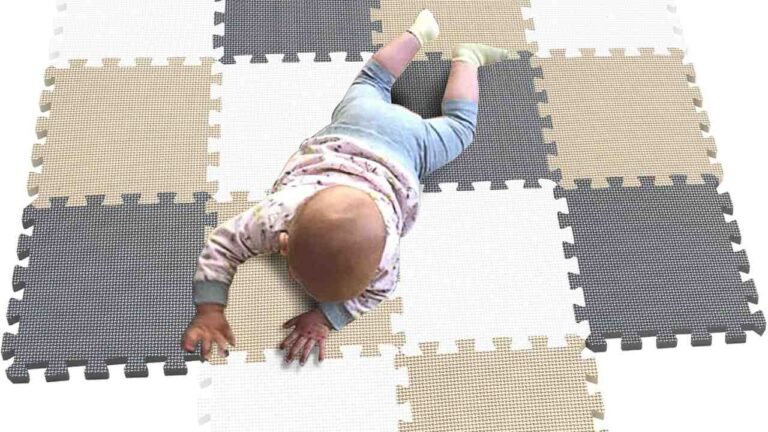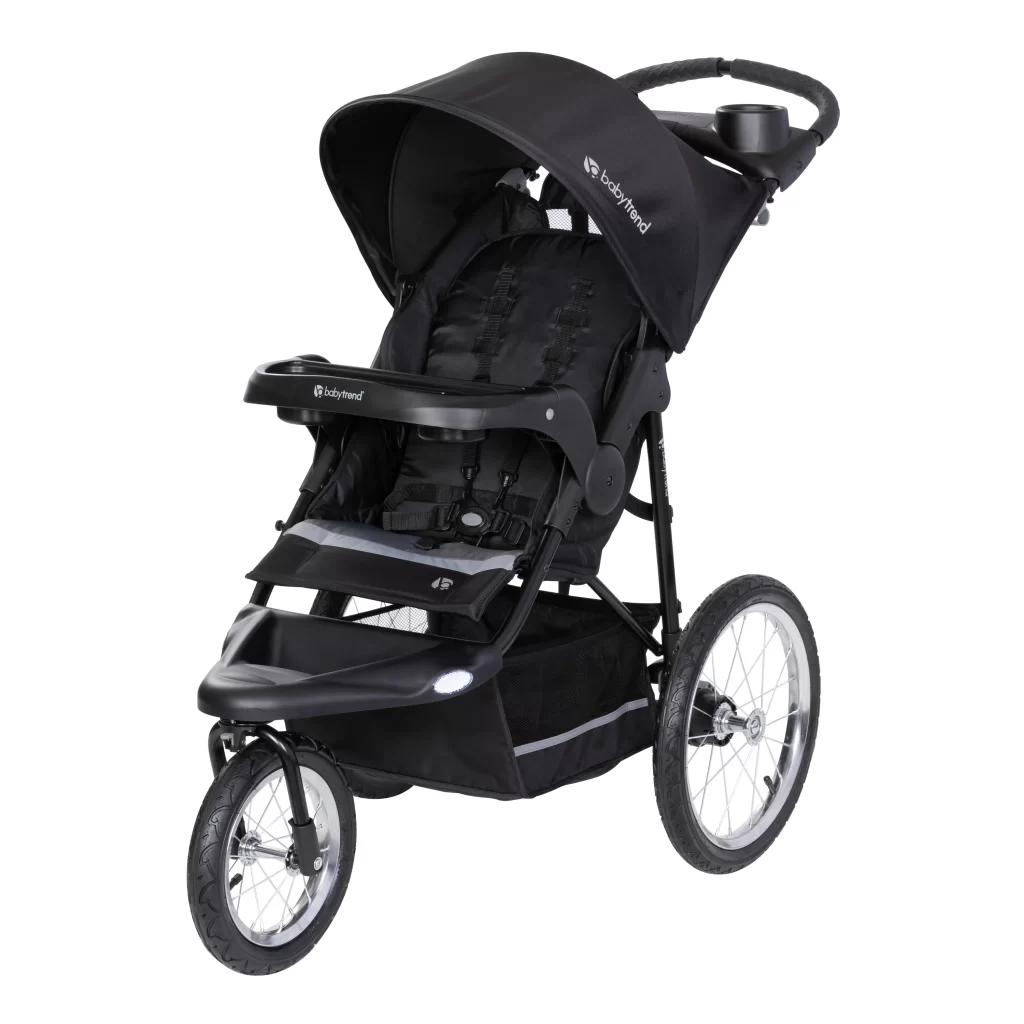

The first month is less about hitting milestones and more about survival — yours and your baby’s. Development is happening, but it is subtle. Your newborn’s entire job right now is eating, sleeping, and adjusting to life outside the womb. Here is what is normal, what to watch for, and what gear genuinely earns its place this month.
Motor Development
Head lifting
Brief 1–2 second lifts during supervised tummy time. Not every baby manages this at exactly 4 weeks — it is fine.
Reflex grasping
Will grip your finger tightly when you press the palm. This is involuntary — the palmar grasp reflex — not intentional reaching.
Rooting reflex
Turns head toward touch on the cheek. This is how babies find the breast or bottle. Completely automatic until about 4 months.
Startle reflex
Arms fling out at loud sounds or sudden drops. Normal and expected. Swaddling reduces it and protects sleep.
Sensory Development
Your baby sees clearly at 8–12 inches — about the distance to your face during feeding. They prefer human faces over any other visual input, can briefly track a slow-moving object, and will turn toward familiar voices within the first week. By four weeks, many babies show a clear preference for their primary caregiver’s voice.
Black-and-white high-contrast patterns are genuinely stimulating at this age. Colorful mobiles and toys are not developmentally relevant yet — those come at 2–3 months when color vision matures.
Sleep Expectations
One-month-olds have no awareness of day versus night — that circadian rhythm develops around 3–4 months. Signs of overtiredness: glazed look, yawning, eye-rubbing, arching back. Overtired babies are harder to settle than tired ones, so watch the wake window closely.
Safe sleep: flat firm surface, on their back, alone in the sleep space, no loose bedding or positioners. The AAP recommends room-sharing (not bed-sharing) for the first 6 months.
Feeding
Breastfed newborns feed 8–12 times per day, roughly every 2–3 hours. Formula-fed babies typically take 1.5–3 oz per feeding at this age, every 3–4 hours. Cluster feeding — frequent feeds for several hours in a row, usually in the evenings — is normal and does not mean your supply is insufficient.
Weight loss in the first 3–5 days is expected. Babies should regain their birth weight by 10–14 days. If not, your pediatrician will tell you.
What You Do Not Need to Worry About Yet
- Social smiling — genuine social smiles appear around 6–8 weeks
- Consistent eye contact — vision is still developing and ranges widely
- Newborn rash, peeling skin, or baby acne — all normal and self-resolving
- Uneven head shape from the birth canal — usually rounds out by 6 weeks
- Hiccups, sneezes, and frequent startles — all completely normal newborn behaviors
- Not sleeping in long stretches — not developmentally expected until 3–4 months