Sleep & nursery gear.
I’ve set up every playard in this guide in a real bedroom, used every monitor from a real nursery, and tested every sleep sack on a real wriggling baby. These are the products that actually survived daily use — and the ones that didn’t make it.
Not sure what you need?
Tell me where you are and I’ll point you to the right guide
I need somewhere safe for my baby to sleep in my bedroom
You need a playard or bassinet. Start with the playard guide — it covers both.
Playard guide →
😴My baby keeps waking up and I want to understand why
Read the safe sleep guide first — it covers position, bedding, and room temperature.
Safe sleep guide →
📷I want to see my baby on my phone when I’m in another room
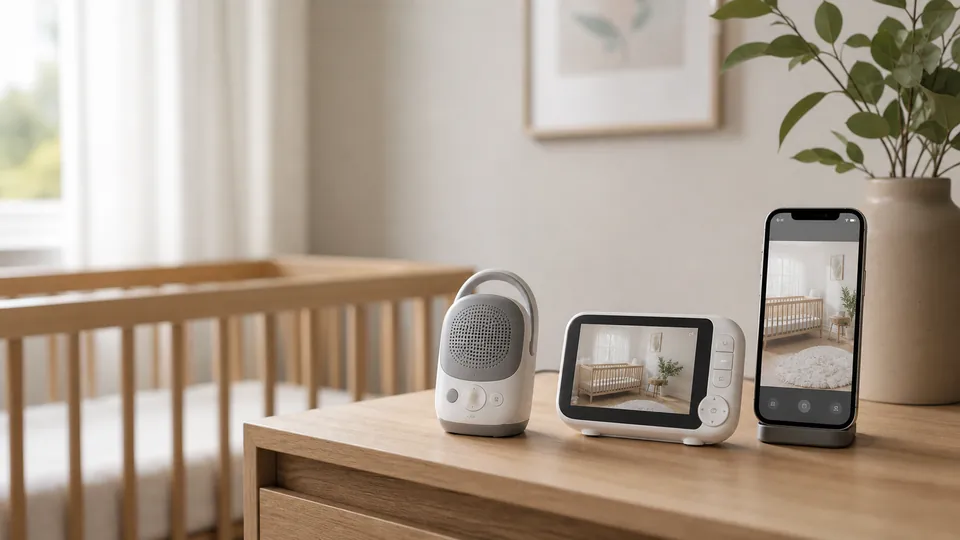
You need a baby monitor. WiFi or non-WiFi — the guide helps you choose.
Monitor guide →
🧢My baby bumps their head when they’re learning to sit or crawl
Head protection pillows might help. Here’s what the research actually says.
Head protection guide →
Sarah’s top pick right now
The one she’d buy again if she had to start over
Playard · Best for small homes
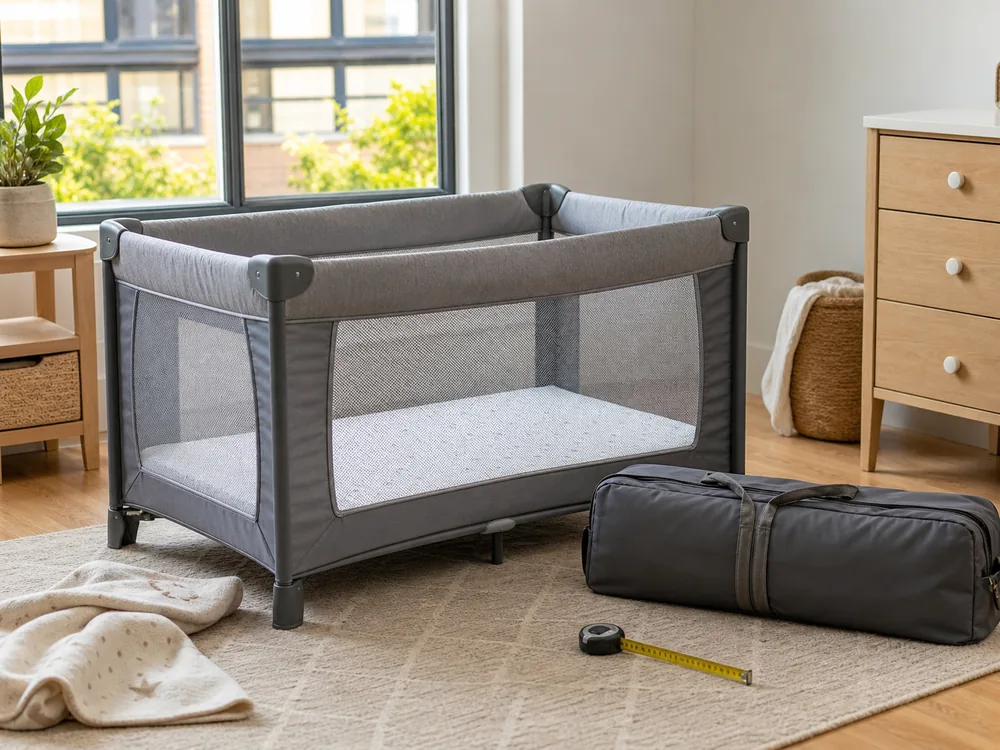
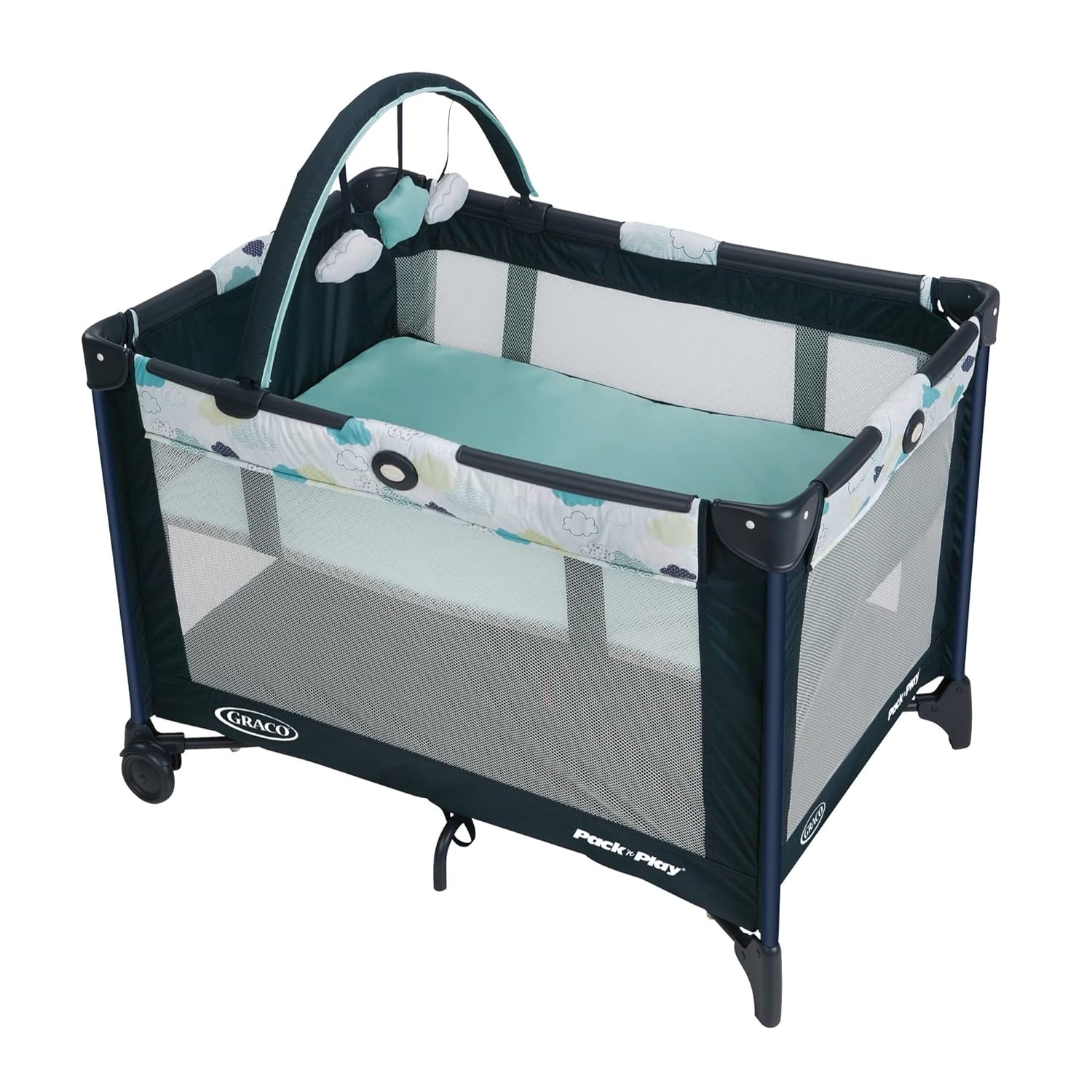
Graco Pack ‘n Play Portable Playard
I tested seven playards over three weeks in a 1-bed London flat. The Graco won — not because it’s the most feature-packed, but because it actually fits next to a double bed, folds in under 20 seconds, and survives a hot wash on the mattress pad. Two years later I still use it.
- ✓Folds faster than any other playard I tested
- ✓Removable newborn bassinet included
- ✓Compact footprint — 60cm × 90cm set up
- ✓Mattress pad machine washable
- ✗No built-in sound machine or nightlight
- ✗Mattress is thin — firmer than I’d like
- ✗Not ideal if you travel by plane regularly
All guides in this category
Every sleep and nursery review, in one place
Top pick
Playard Comfort and Style: The Graco Pack ‘n Play Tested in a Real Home
Seven playards, three weeks, one very small flat. I set them all up, folded them all down, and used them with a real baby. Here’s what I actually found — and which one I’d buy again.
Safety guide
Best Baby Pillows — and the Age When They’re Actually Safe
This is the question every new parent searches at 11pm. The answer depends on your baby’s age and the AAP’s guidance is clearer than most sites make it sound. Here’s the honest answer.
Baby Head Protection Pillows: Do They Actually Help?
These look useful. The research is more complicated than the marketing suggests. Here’s what they actually protect against, when they’re worth buying, and when they’re just reassuring packaging.
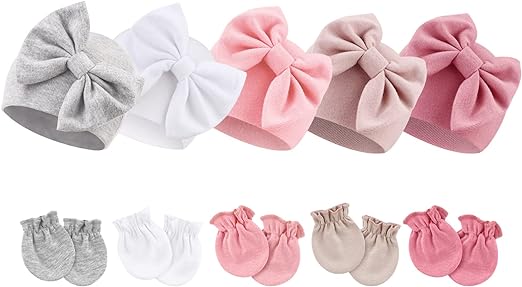
Baby Girl Hats: What’s Safe to Wear for Sleep and What Isn’t
Hats during sleep sound harmless. They’re not always. Here’s the guidance on when it’s appropriate, which fabrics to avoid, and the specific styles that work safely for newborns in cold rooms.
Quick reference
The AAP safe sleep rules — in plain language
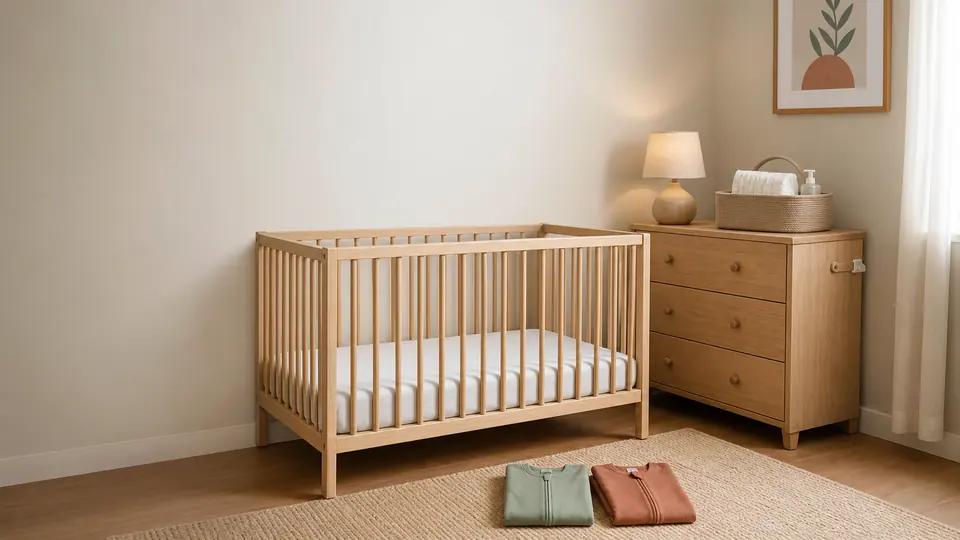
Alone, on their back, in a cot
Every sleep, every time. No bed-sharing. No sofa or armchair sleeping.
No soft bedding under 12 months
No pillows, duvets, bumpers, or loose blankets. Use a fitted sheet only.
Room temperature 16–20°C
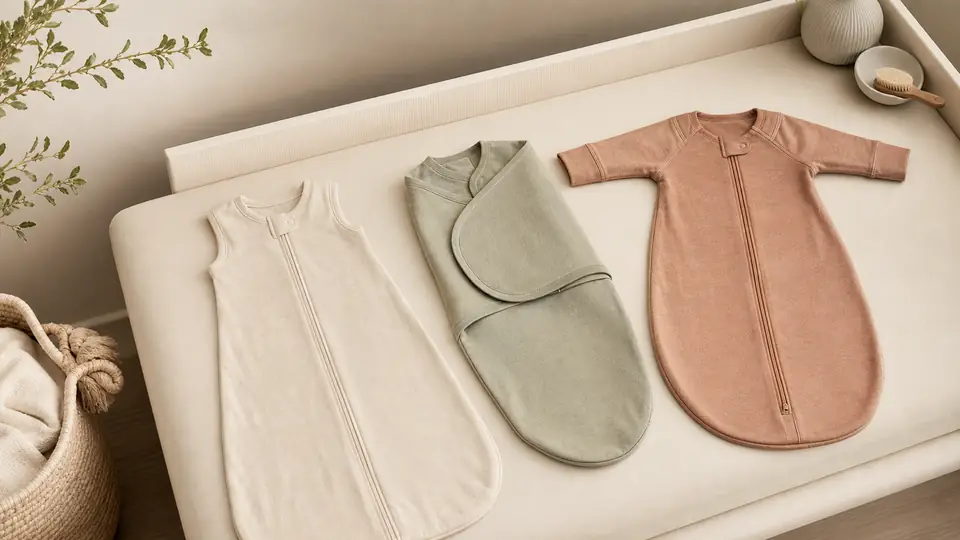
Use a TOG-rated sleep sack appropriate for the room. No overheating.
Firm, flat mattress — no incline
The 2022 AAP update explicitly warns against inclined sleepers. Flat only.
Source: American Academy of Pediatrics, Safe Sleep Guidelines 2022. Fortuna Est is not a medical source — always consult your paediatrician.
Quick answers
Sleep and nursery questions parents ask first
What sleep gear does a newborn actually need?
Start with a firm, flat sleep space, fitted sheets, a thermometer, and a TOG-rated sleep sack. Pillows, bumpers, loose blankets, and inclined sleepers are not needed for newborn sleep.
Is a playard safe for overnight sleep?
A playard can be used for sleep when it follows the manufacturer’s safe-sleep setup, uses the original firm mattress, and has no added pillows, toppers, or loose bedding.
When can a baby use a pillow?
Most safe-sleep guidance says to keep pillows and other soft objects out of the sleep space for babies under 12 months. For toddlers, choose a low, firm pillow sized for small bodies.
Do parents need a WiFi baby monitor?
Not always. WiFi monitors are convenient for phone viewing and travel, while non-WiFi monitors often feel simpler and more private at home. The right choice depends on your rooms, routines, and comfort with app-based monitoring.
Coming next
Guides being written right now
Best Baby Monitor 2026: Nanit vs Infant Optics vs Eufy — 4 Tested
WiFi vs non-WiFi, breathing tracking, night vision, and the one I’d actually buy for a second baby.
Notify me when published →
Best Bassinet for Newborns 2026: Halo, Snoo, and 3 Others Tested
Is the Snoo actually worth £1,200? I borrowed one for eight weeks to find out. Spoiler: complicated.
Notify me when published →
Best Sleep Sacks by TOG Rating: What to Use at What Temperature
Most parents use the wrong TOG. A practical guide to the Ergopouch, Slumbersac, and Grobag by season.
Notify me when published →
Every Sunday morning
Get notified when new sleep guides are published.
One email per week. The baby monitor guide, the bassinet guide, and the sleep sack guide are all coming soon — be the first to know.