
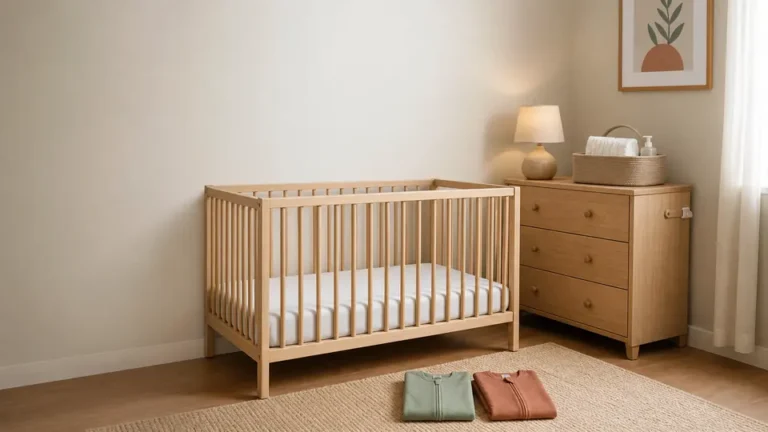
Most nursery checklists are shopping lists in disguise. They make every inconvenience look like a product problem and every empty corner look unfinished.
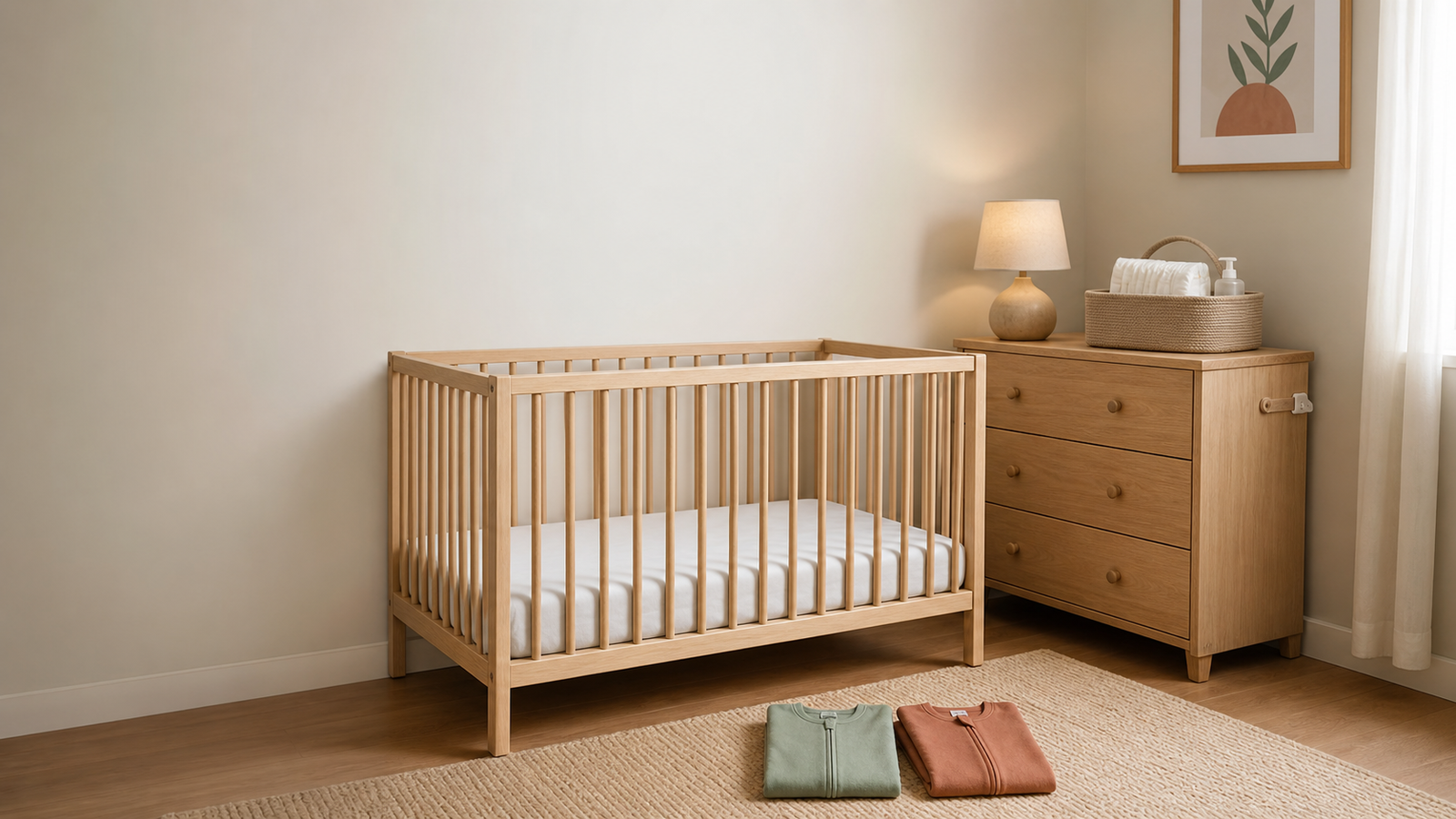
A newborn does not need a showroom. Your baby needs a safe place to sleep, clean clothing, feeding supplies that fit your plan and a reliable way to handle diapers. Everything else can earn its place later.
This checklist separates genuine starting needs from optional conveniences—and identifies products that should stay out of an infant sleep space altogether.
The essentials to have before baby arrives
A safe sleep space
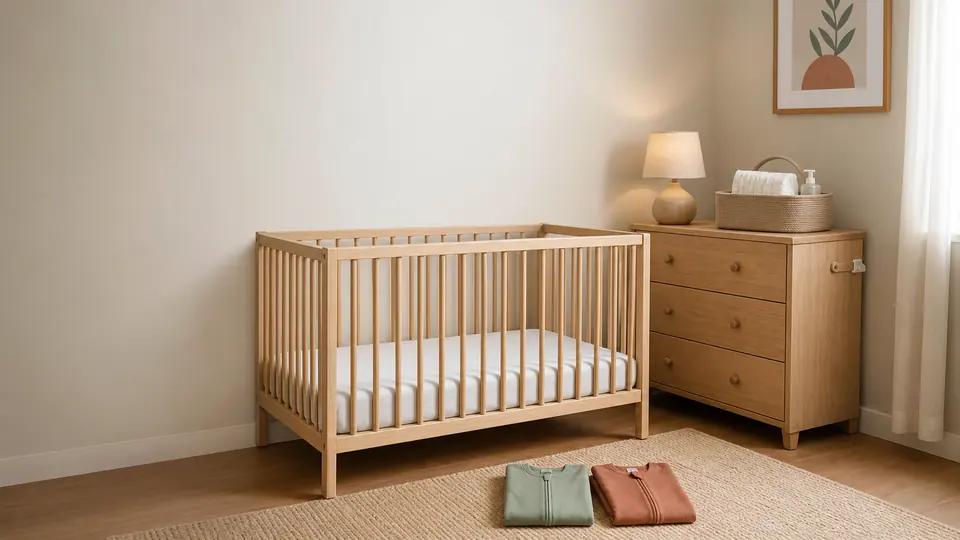
Choose one product intended for infant sleep that meets applicable federal requirements:
- a crib;
- a bassinet or cradle;
- a play yard; or
- a bedside sleeper.
Use the firm, flat mattress or pad designed for that product and a tightly fitted sheet. Check the model for recalls and follow the assembly instructions.
The safest setup is also the simplest. Place your baby on their back and leave pillows, blankets, bumpers, toys, positioners and added padding out.
The AAP recommends room-sharing without bed-sharing, ideally for at least the first six months. The “nursery” may therefore begin as a safe sleep space in the caregivers’ room rather than a separate decorated room.
Two or three fitted sheets
You need enough for a middle-of-the-night change, not a full linen collection. Buy sheets made for the exact sleep surface. A loose, undersized or overly tight sheet can compromise the fit.
Waterproof protection should be limited to a thin, fitted cover approved for the mattress. Do not add a plush pad or stack layers to make the surface softer.
Appropriate sleep clothing
Footed pajamas or a correctly sized, non-weighted wearable blanket can provide warmth without loose bedding. Buy only a few items in the newborn size; babies grow at different rates, and the right size is more important than the age printed on the label.
Do not use weighted sleep sacks, weighted swaddles or weighted blankets.
A safe diaper-changing station
This can be a dedicated changing table or a simple changing pad used as directed on a stable surface. Keep diapers, wipes, cream and a change of clothing within the caregiver’s reach so you do not step away.
Use the changing surface’s restraint when provided, but never rely on it as permission to leave a baby unattended. Keep one hand on the baby.
Basic clothing storage
A dresser, closet shelf or labeled bins will all work. Anchor any tip-over-prone furniture to the wall using appropriate hardware. Keep heavy objects off high shelves above the changing or sleep area.
A feeding station that matches your plan
For breastfeeding, this may be a supportive adult chair, water bottle, burp cloths and a small lamp. For bottle feeding, add enough bottles for your realistic washing routine and a clean place for drying.
A nursing pillow is a feeding aid for an awake caregiver—not an infant sleep product. Move the baby to a proper sleep space if they fall asleep.
Useful, but not essential on day one
Blackout window coverings
Darkening a room may support naps, but it is not necessary for every baby. If you install shades, choose cordless window coverings or keep all cords completely inaccessible.
A dimmable light
A low light can make overnight feeding and diaper changes easier. Place it where it will not require a loose cord near the crib.
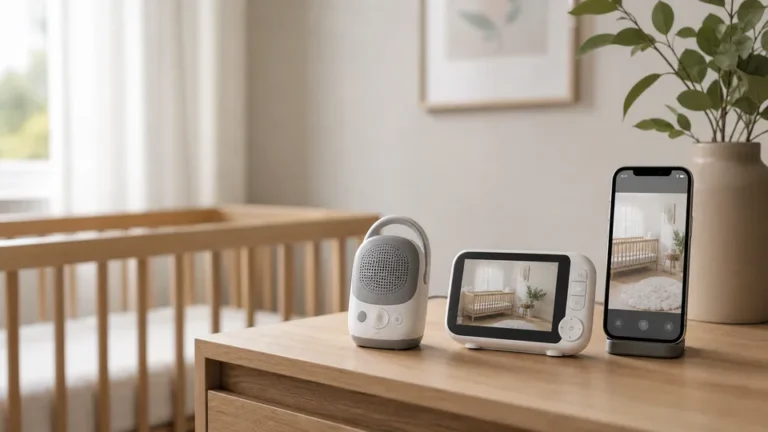
A baby monitor
A monitor is useful when distance or household noise makes it difficult to hear the baby. A small home may not need one immediately.
Consumer monitors do not prevent SIDS and do not replace a safe sleep setup. If you choose Wi-Fi video, enable security updates, unique passwords and two-factor authentication where available.
A sound machine
White noise may mask unpredictable household sounds, but it is optional. Place the machine well away from the crib, use the lowest effective volume and limit duration when possible.
A comfortable adult chair
Choose a chair for the caregiver, not a padded sleep surface for the baby. If there is a risk you will fall asleep while feeding, plan ahead: avoid sofas and armchairs, which are especially hazardous places to sleep with an infant, and return the baby to their own sleep space as soon as possible.
A small laundry hamper and washable mat
These can simplify daily cleanup, but almost any existing household container or washable rug can serve the same purpose. Keep thick rugs and loose textiles away from heaters and ensure they do not create a trip hazard during night care.
Items that can wait
A full-size dresser or wardrobe
Newborn clothing takes little space. Wait until you understand how much storage your household actually needs.
A wipe warmer
Some families like one, but it creates another appliance to fill, clean and place. Ordinary wipes work without it.
A bottle warmer
Many babies accept milk at different temperatures. Safe preparation and storage matter more than serving it warm. Never microwave breast milk or formula because hot spots can burn a baby’s mouth.
A dedicated diaper pail
A covered household bin emptied frequently may be sufficient. Buy a specialized pail only if odor control or pet access becomes a real problem.
Coordinated décor
Artwork, mobiles and shelves can wait until the safety layout is settled. Keep objects and cords away from the crib and changing area. Move a mobile once the baby can push up or reach it, following its instructions.
Products to skip for infant sleep
Do not put these in or on the infant sleep space:
- infant pillows, including head-shaping pillows;
- crib bumpers, including mesh liners;
- positioners, wedges and anti-roll products;
- loungers or nests;
- loose blankets and quilts;
- stuffed toys;
- extra mattresses or padding;
- weighted sleep products; or
- canopies and cords within reach.
“Breathable,” “organic,” “doctor designed” and “anti-suffocation” are marketing terms unless tied to clear, relevant evidence. They do not override safe-sleep guidance.
Safety beyond the crib
Anchor furniture
Secure dressers, bookcases and other tip-over hazards to the wall. Do not place televisions or heavy décor on nursery furniture that was not designed to support them.
Control cords
Use cordless window coverings. Route monitor, lamp and sound-machine cords well beyond the reach of a child who may later stand and stretch from the crib.
Check alarms
Install and maintain smoke and carbon-monoxide alarms according to local requirements and manufacturer instructions. Test them regularly.
Review temperature and airflow
Avoid overheating. Do not position the crib directly beside a portable heater, radiator, fireplace, fan cord or air-conditioning blast. Keep portable heaters out of the nursery unless they can be used fully in accordance with their clearance and safety instructions.
Reassess as your baby develops
A room safe for a newborn lying still will need changes when the baby can roll, sit, reach, crawl and climb. Put a recurring monthly nursery check on your calendar during the first year.
A realistic one-page checklist
Buy or arrange now
- Compliant crib, bassinet, play yard or bedside sleeper
- Firm, properly fitted mattress or pad
- Two or three fitted sheets
- A few correctly sized sleep outfits or non-weighted sleep sacks
- Diapers, wipes and barrier cream
- Stable changing surface
- Feeding basics suited to your plan
- Smoke and carbon-monoxide alarms
- Furniture anchors and safe cord routing
- Recall checks and product registration
Consider later
- Monitor
- Sound machine
- Blackout shade
- Dimmable lamp
- Specialized diaper pail
- Bottle or wipe warmer
- Larger storage furniture
- Decorative accessories
Keep out of the sleep space
- Pillows
- Blankets
- Bumpers
- Toys
- Positioners
- Loungers
- Added padding
- Weighted sleep products
The bottom line
Prepare the safety essentials, then let daily life tell you what to buy next. A sparse nursery is not an unfinished nursery. It can be an intentional space with fewer hazards, less waste and more room to adapt as your baby grows.
Sources
- CPSC: Safe Sleep—Cribs and Infant Products
- CPSC: Childproofing Your Home
- AAP: How to Keep Your Sleeping Baby Safe
- AAP: Preventing Excessive Noise Exposure
This article provides general educational information and is not a substitute for advice from your child’s healthcare professional.