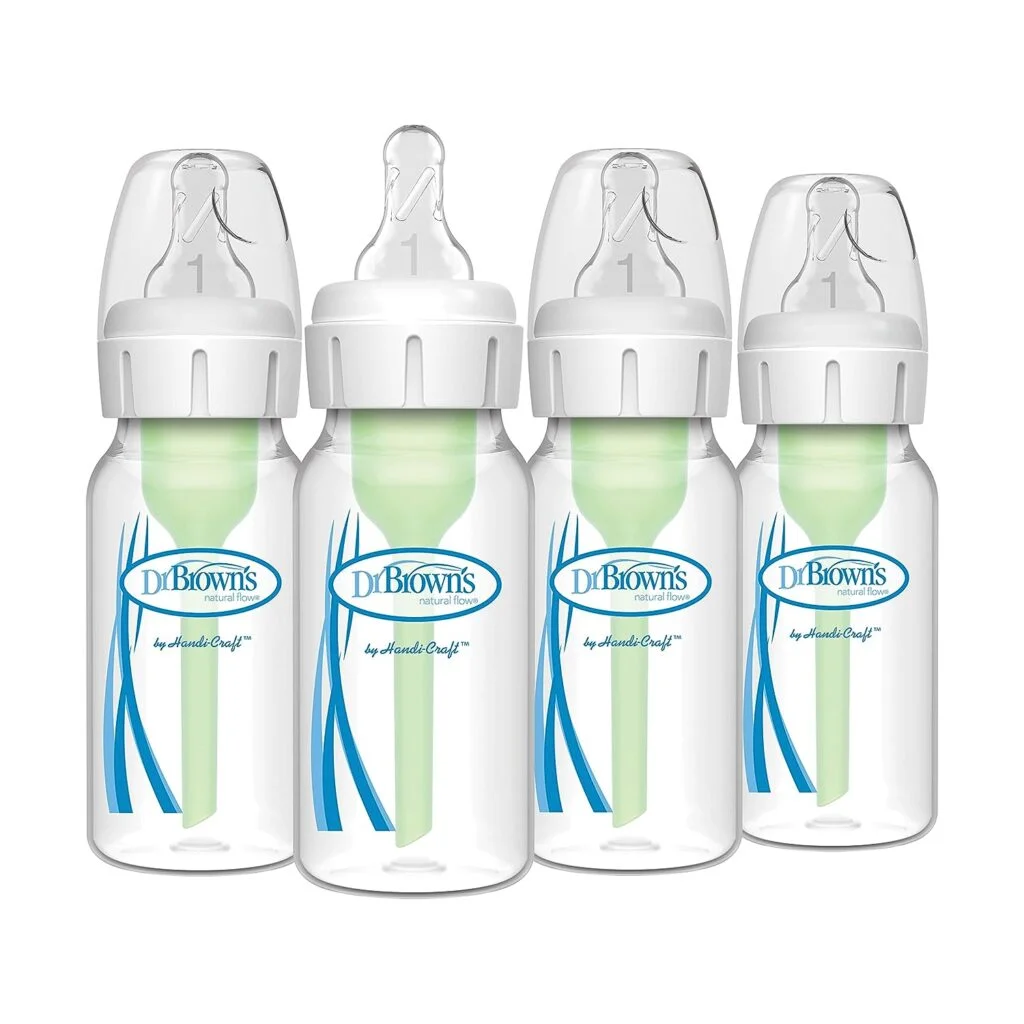
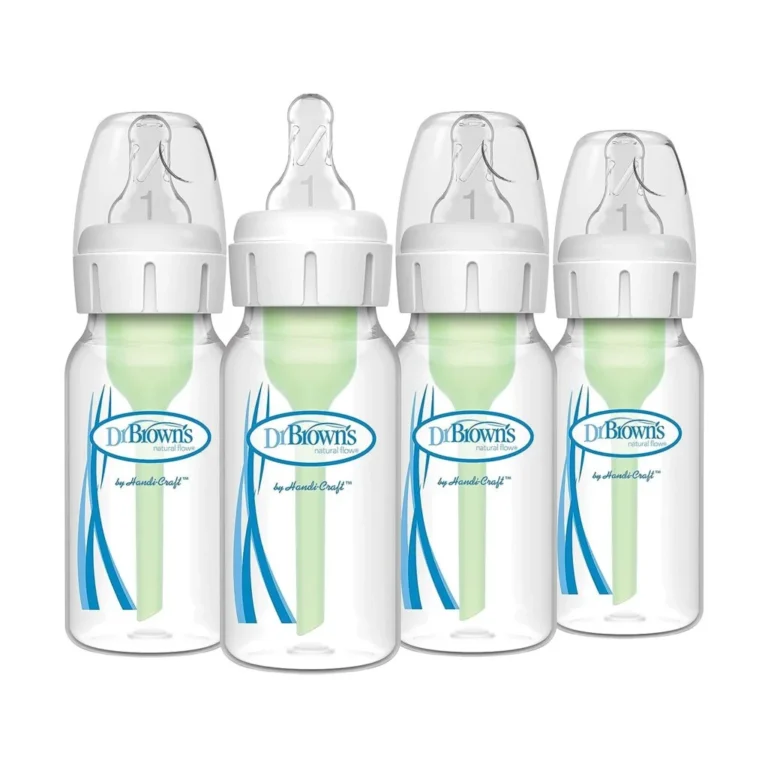
Walk down the bottle aisle and Dr. Brown’s alone can take up half a shelf — narrow neck, wide neck, glass, plastic, with a vent, without one. It’s not actually as complicated as it looks once you know what each choice is solving for. Here’s how to land on the right one for your baby without buying three different versions to find out by trial and error.
The one feature that defines the whole line
Every Dr. Brown’s bottle in the Options+ range is built around the same internal vent system — a small tube that routes air away from the milk as your baby feeds. The idea is to stop the vacuum and air bubbles that regular bottles create, which is what’s linked to spit-up, gas, and general fussiness during and after feeds. The vent is removable once your baby’s feeding is more established, so you’re not locked into a single format as they grow.
Narrow neck vs. wide neck
This is mostly about compatibility and comfort, not performance. Narrow-neck bottles fit most manual and electric breast pump flanges directly, which matters if you’re combo-feeding and want one set of parts across pumping and bottle feeding. Wide-neck bottles are easier to fill and clean by hand, since there’s simply more room to get a bottle brush and your fingers inside. If you’re pumping regularly, check your pump’s flange compatibility before choosing — it can save you from needing a separate adapter.
Glass vs. plastic
Glass bottles are heat and thermal-shock resistant, dishwasher safe, and many parents prefer them simply for peace of mind about what the bottle is made of — no plastic touching warm milk. They’re heavier and a real drop risk with an older baby who likes to fling things, so plastic is often the more practical choice once your baby starts holding their own bottle. Neither is a wrong choice; it’s a genuine trade-off between peace of mind and everyday practicality.
Do you actually need the vent system?
If your baby shows real signs of gas, colic, or reflux, the vent system is the reason to choose this brand over a simpler bottle in the first place. If you haven’t noticed feeding issues, a simpler bottle without the extra parts may serve you just as well with less to wash. One thing worth knowing before you buy: the vent system means more pieces per bottle — a collar, reservoir, and vent insert in addition to the standard parts — so factor in a bit more cleaning time compared to a basic two-piece bottle.
Quick answers
Do I have to use the vent system, or can I skip it?
You can use these bottles with or without the vent in place — many parents start with it and remove it once feeding is well established, without needing to switch bottles entirely.
Are these bottles compatible with other brands’ pump flanges?
Narrow-neck Dr. Brown’s bottles fit a wide range of pump brands directly, but it’s worth checking your specific pump model before assuming compatibility.
Want the deeper dive on how the anti-colic vent actually works?
See our full
Dr. Brown’s Anti-Colic Baby Bottle review for how the system functions and who benefits most from it.